How Dhaka Shopped in the 1950s: Bazaars and New Market
Photographs from 1952–53 reveal Dhaka's crowded bazaars, tailors and shoemakers as New Market was being built.
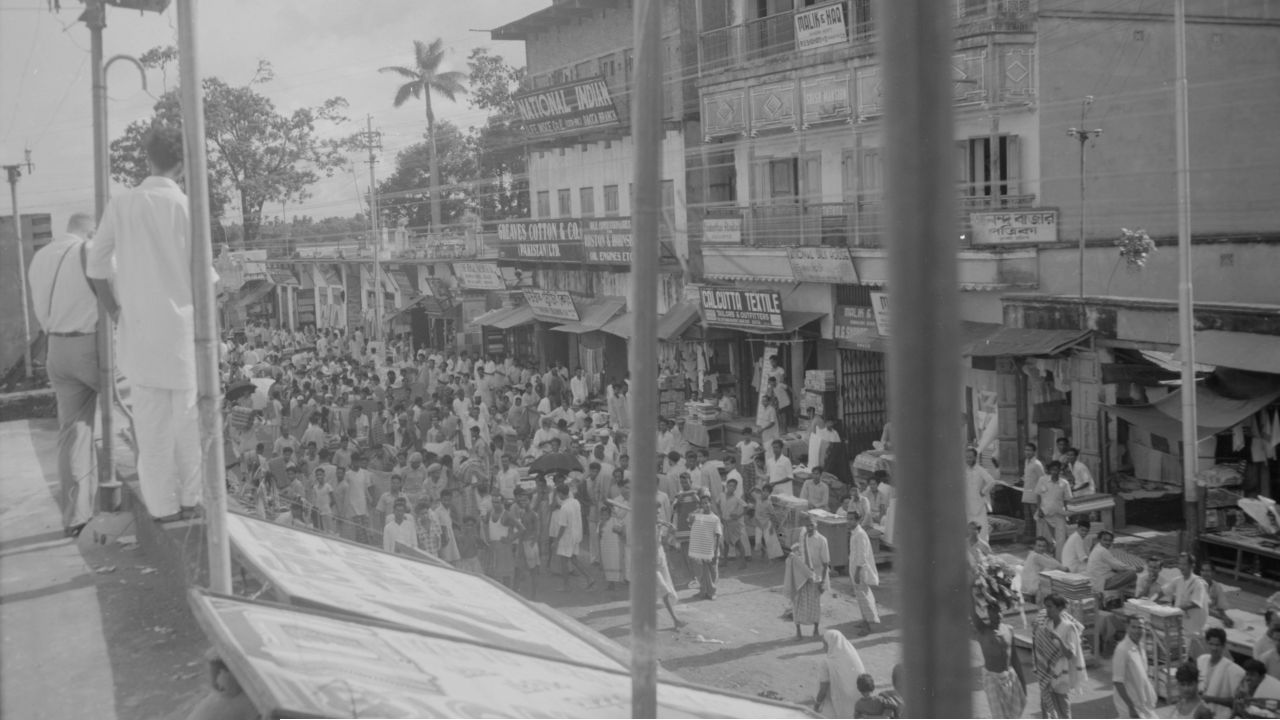
In 1952, a photographer captured a crowded textile market in Dhaka. Shoppers gathered among stalls and shops, with merchandise displayed around them. It was an ordinary scene of city life, yet the photograph now offers a remarkable glimpse into how people bought and sold goods more than seventy years ago.
At almost the same time, Dhaka was building a different kind of shopping destination. Between 1952 and 1954, New Market was developed as a planned commercial complex, introducing a new arrangement of shops and pedestrian spaces to the growing city. Traditional bazaars and this new shopping centre were not separated by generations; they belonged to the same historical moment.
A series of photographs from 1952 and 1953 brings that moment into focus. Together with contemporary archival descriptions and later historical research, they reveal the traders, craftspeople and commercial spaces of a city whose shopping culture was changing.
Inside Dhaka's Bazaars in the 1950s
The opening photograph captures the energy of a crowded market. People fill the spaces between stalls, while textiles and shopfronts form part of the busy scene. Unlike the controlled interior of a modern department store, this commercial environment depended on many individual businesses sharing a larger marketplace. Shoppers could move from one seller to another, encountering different products within a relatively compact area.
This form of commerce had deep roots in Dhaka. Historical accounts describe how marketplaces developed along streets and within neighbourhoods, often becoming associated with particular trades. Tantibazar, Shankharibazar and Banglabazar are among the familiar names connected with the older city's commercial geography. Such areas were not originally designed as unified shopping complexes; their identities developed through the activities of merchants, craftspeople and residents over time. [8]
The archival description does not identify the particular bazaar shown in the 1952 photograph. Even without a precise market name, however, the image provides valuable evidence of the city's everyday commercial life. Its crowded scene suggests how strongly shopping was connected to shared urban spaces, where the movement of customers and the work of traders took place in close proximity.
A photograph taken the following year offers a more intimate view. It shows a fabric vendor at a Dhaka bazaar, surrounded by clothing items offered for sale. The archival note identifies the goods as various clothing articles, but tells us little about the seller's individual circumstances. [2]
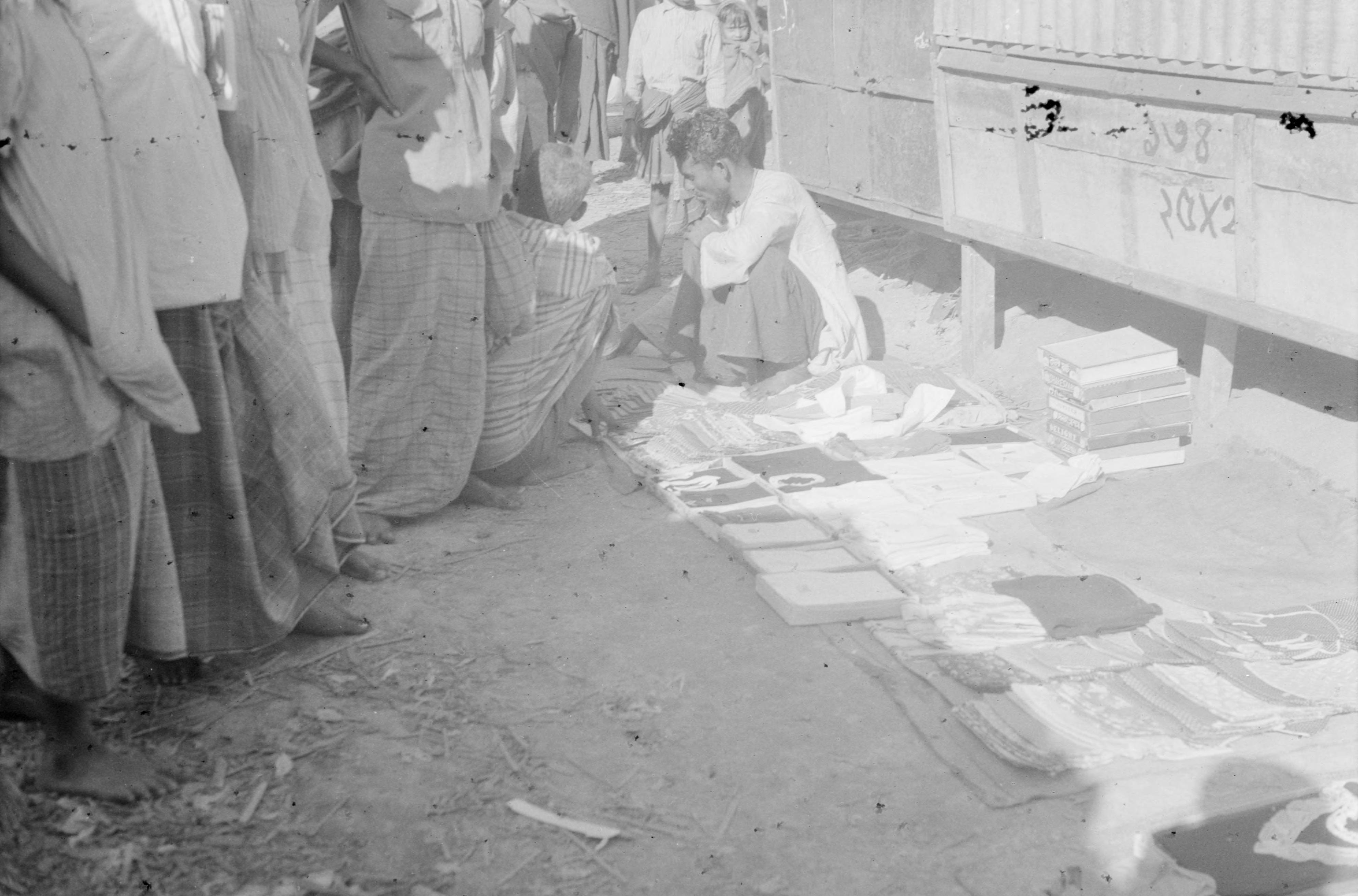
Caption: A fabric vendor displaying clothing items at a Dhaka bazaar in 1953. Photograph by Khaleq, UWM Libraries. [2]
The modest scale of the seller's space illustrates one characteristic of bazaar commerce. A merchant did not need to operate an entire building or maintain the stock of a department store to participate in the city's retail economy. Instead, individual businesses contributed to the wider market, each offering its own merchandise within an established shopping destination.
Another photograph from 1953 shows a man surrounded by baskets and numerous wares. The photographer described a large assortment of goods, although the archival record does not identify every object visible in the image. [3]
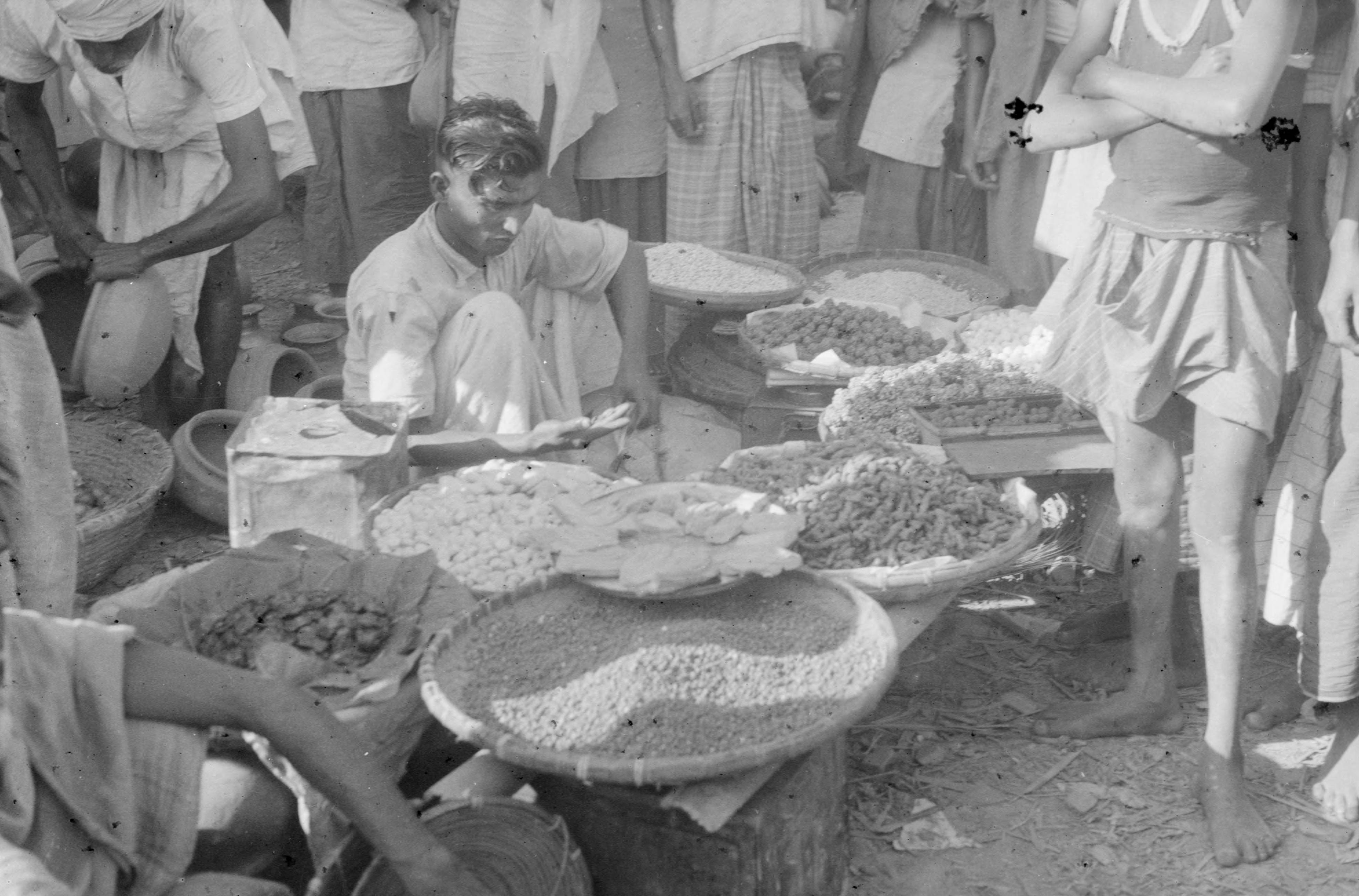
Caption: A merchant surrounded by baskets and goods at a Dhaka bazaar, 1953. Photograph by Khaleq, UWM Libraries. [3]
The two vendor photographs illustrate how commercial variety could emerge from the presence of many relatively small businesses. Customers visiting a market might encounter textiles, household goods and other merchandise offered by different traders. The market's usefulness came not only from what any single seller stocked, but also from the concentration of businesses operating nearby.
This relationship between individual traders and the wider bazaar helps explain why traditional markets remained central to urban life. They provided places where goods, sellers and customers could come together, while their familiar locations became part of the city's commercial geography. Yet the work taking place within these markets was not limited to selling finished products.
Buying, Making and Repairing
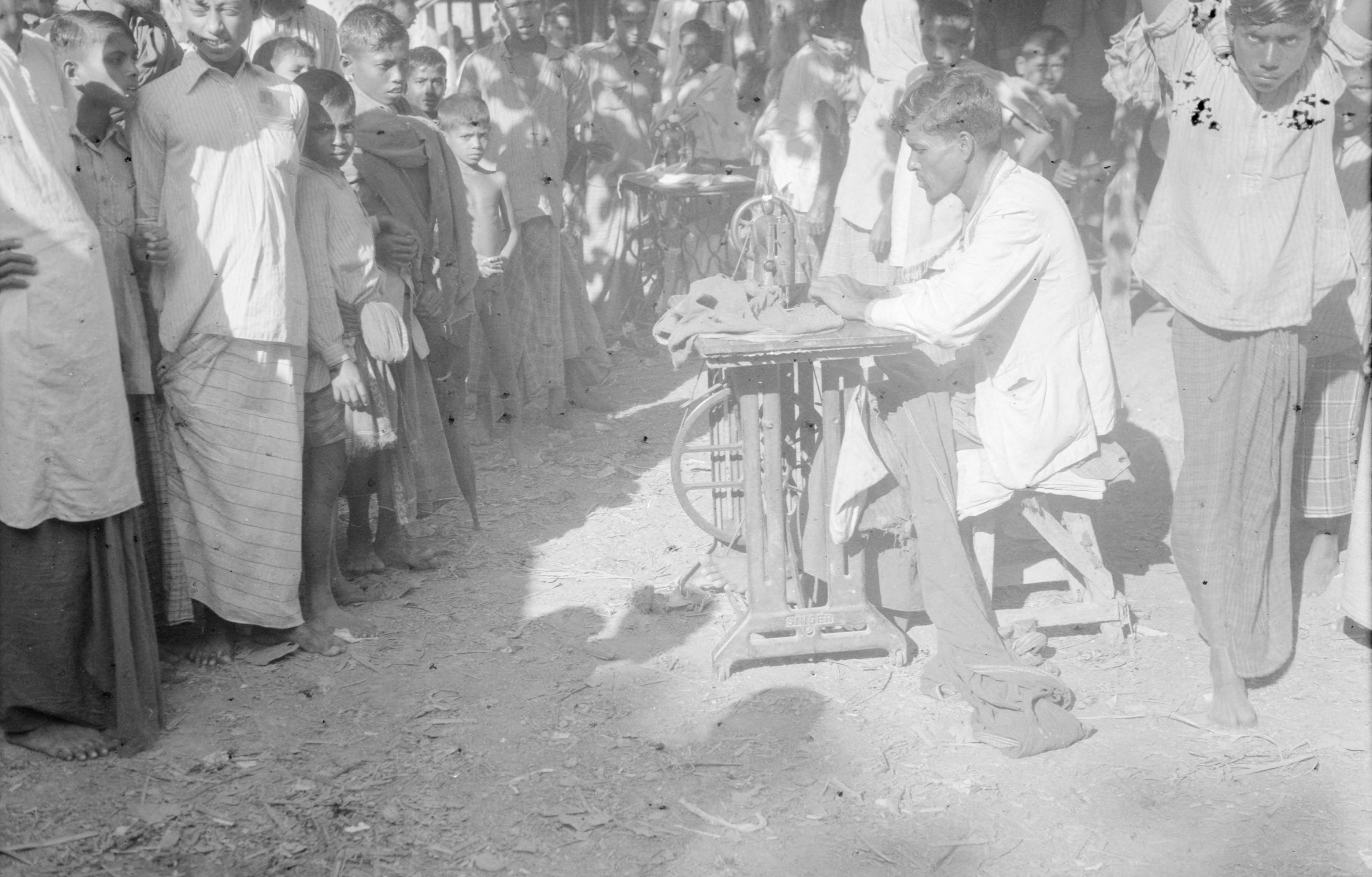
Among the photographs from 1953 is an image of a tailor working at a sewing machine in a Dhaka bazaar. Unlike the pictures of merchants displaying goods, this photograph records someone engaged in skilled work. The tailor's equipment and activity reveal another aspect of the market economy: customers could find people who made or altered items, not merely businesses that sold them. [4]
Caption: A tailor working with a sewing machine in a Dhaka bazaar, 1953. Photograph by Khaleq, UWM Libraries. [4]
The relationship between fabric selling and tailoring is particularly revealing. One photograph records merchandise being offered for sale, while another shows the labour involved in working with textiles. They do not document a transaction between the two individuals, but they establish that retailing and skilled production were both present within Dhaka's bazaar environment.
For shoppers, such an arrangement could make a market useful in several ways. They might visit to purchase a finished item, obtain material for clothing or seek the services of someone with specialised skills. For craftspeople, working within a commercial area offered opportunities to provide services in a place already frequented by potential customers. These connections made the marketplace more than a location for exchanging goods.
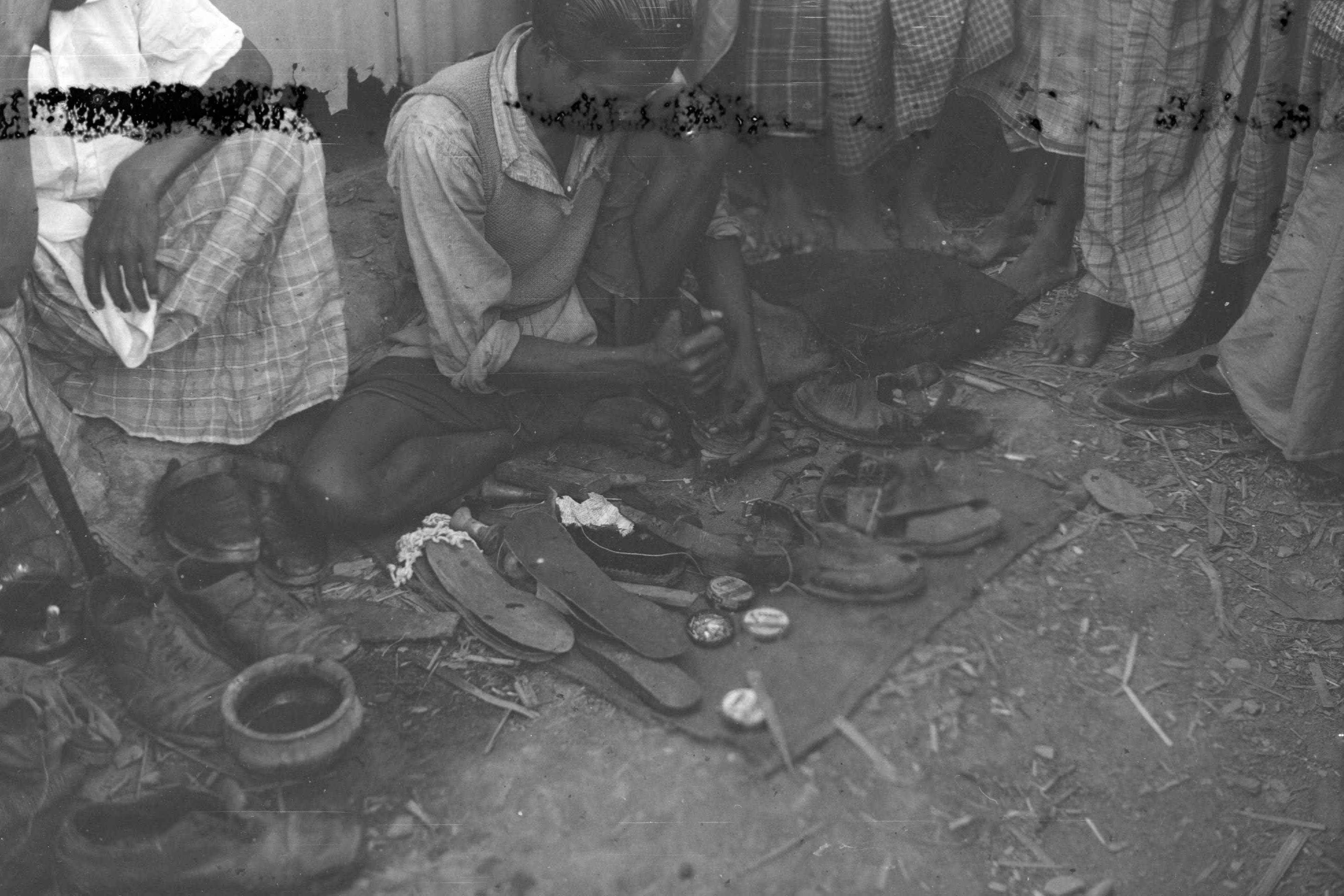
A further photograph from 1953 records a shoemaker working on sandals at a Dhaka bazaar. The archival title identifies shoe repair, while the photographer's note describes the worker's activity more specifically. [5]
Caption: A shoemaker working on sandals at a Dhaka bazaar in 1953. Photograph by Khaleq, UWM Libraries. [5]
The shoemaker represents another important service: repairing possessions so that they could remain useful. His work required practical knowledge and skill, and it gave customers an alternative to purchasing new footwear whenever an existing item needed attention. Although the photograph does not reveal his earnings or the price of his services, it preserves a direct record of this occupation within the market.
Together, the tailor and shoemaker photographs broaden our understanding of shopping in 1950s Dhaka. Markets could accommodate activities that today might be distributed among separate shops, workshops and service centres. The same commercial environment brought traders, skilled workers and customers into contact, allowing different forms of economic activity to develop alongside one another.
The individuals in these photographs are not prominent figures in conventional histories of Dhaka. Their names, personal circumstances and working lives remain largely unknown. Yet the images preserve evidence of the practical labour behind everyday urban commerce, reminding us that the city's economic history was shaped by ordinary workers as well as major buildings and institutions.
A City and Its Shopping Habits Were Changing
Dhaka's commercial life was entering a period of significant change. Following the Partition of British India in 1947, the city became the capital of East Bengal, the eastern province of Pakistan, which was later renamed East Pakistan. Its growing administrative importance contributed to urban expansion and increased demand for residential, commercial and public facilities.
The older parts of Dhaka continued to contain established markets and trading streets, but newer residential areas were developing beyond the traditional commercial centre. Shopping facilities increasingly had to serve people whose homes, workplaces and daily journeys were becoming distributed across a changing city.
In their study of Dhaka's shopping architecture, Qazi Muhammad Arif and Ishrat Islam describe the emergence of planned commercial facilities as an important development during the Pakistan period. Earlier marketplaces had commonly grown along streets or around concentrations of particular trades. Planned shopping centres introduced a more coordinated approach, arranging shops and circulation spaces within a single architectural complex. [8]
The distinction involved more than appearance. A purpose-built shopping centre could provide recognisable entrances, sheltered walkways and an organised layout, allowing customers to move through the premises without relying entirely on the street patterns of older commercial neighbourhoods. Such facilities could also be located near residential areas whose inhabitants needed convenient access to shops.
New Market was conceived within this changing urban environment, particularly to serve people living around Dhaka University, Azimpur and Dhanmondi. [7] These areas formed part of a city whose commercial geography was extending beyond the traditional shopping districts.
It would nevertheless be misleading to imagine that new development made established bazaars unnecessary. The photographs from 1952 and 1953 show that merchants and craftspeople were still working within traditional market environments while New Market was being constructed. Dhaka was adding new commercial spaces to an existing network of businesses, rather than beginning its shopping history anew.
The Birth of Dhaka New Market, 1952–1954
Dhaka New Market was built between 1952 and 1954. According to Banglapedia, the shopping complex was developed to meet the needs of the city's residents, particularly those associated with Dhaka University, Azimpur and Dhanmondi. Its construction marked an important moment in the development of planned retail spaces in Dhaka. [7]
The original complex was notable for its layout. Three high arched entrances led towards organised rows of shops, while covered verandas provided sheltered pedestrian routes in front of the shopfronts. The architecture offered a more coordinated arrangement of commercial space than the gradually developed streets and bazaars of the older city.
Arif and Islam describe New Market as a single-storey complex with a triangular plan, wide covered corridors and open-air walkways separating different rows of shops. [8] These features created a shopping environment that was planned but not fully enclosed. Visitors could walk between stores in relatively open surroundings, with sheltered passages providing some protection from the weather.
This design is important because New Market was not a modern air-conditioned mall in the contemporary sense. Its architectural innovation lay in the purposeful organisation of shops and shared spaces. The complex brought multiple retailers together within a planned setting while retaining the open-air character familiar to many forms of shopping in the region.
New Market also developed a social identity. Its shops attracted customers, but the shared spaces offered opportunities for browsing, walking and meeting others. The market became a destination where shopping could form part of a wider outing rather than a journey made solely to purchase a particular item.
One recollection of its opening illustrates how personal memories can preserve a different side of architectural history. In a 2022 article for The Business Standard, journalist Kamrun Naher recorded the memories of Amanat Ullah Khan, who attended New Market's opening ceremony in 1954 as a six-year-old boy. Many decades later, he remembered the refreshments served at the event, particularly a decorated pastry that he was unable to eat. [9]
The memory is a small but telling detail. Historical accounts can establish when a building was constructed and how its spaces were arranged, while personal recollections show how a place entered people's lives. For a child attending the ceremony, the occasion was memorable not because of the market's architectural significance, but because of an experience associated with being there.
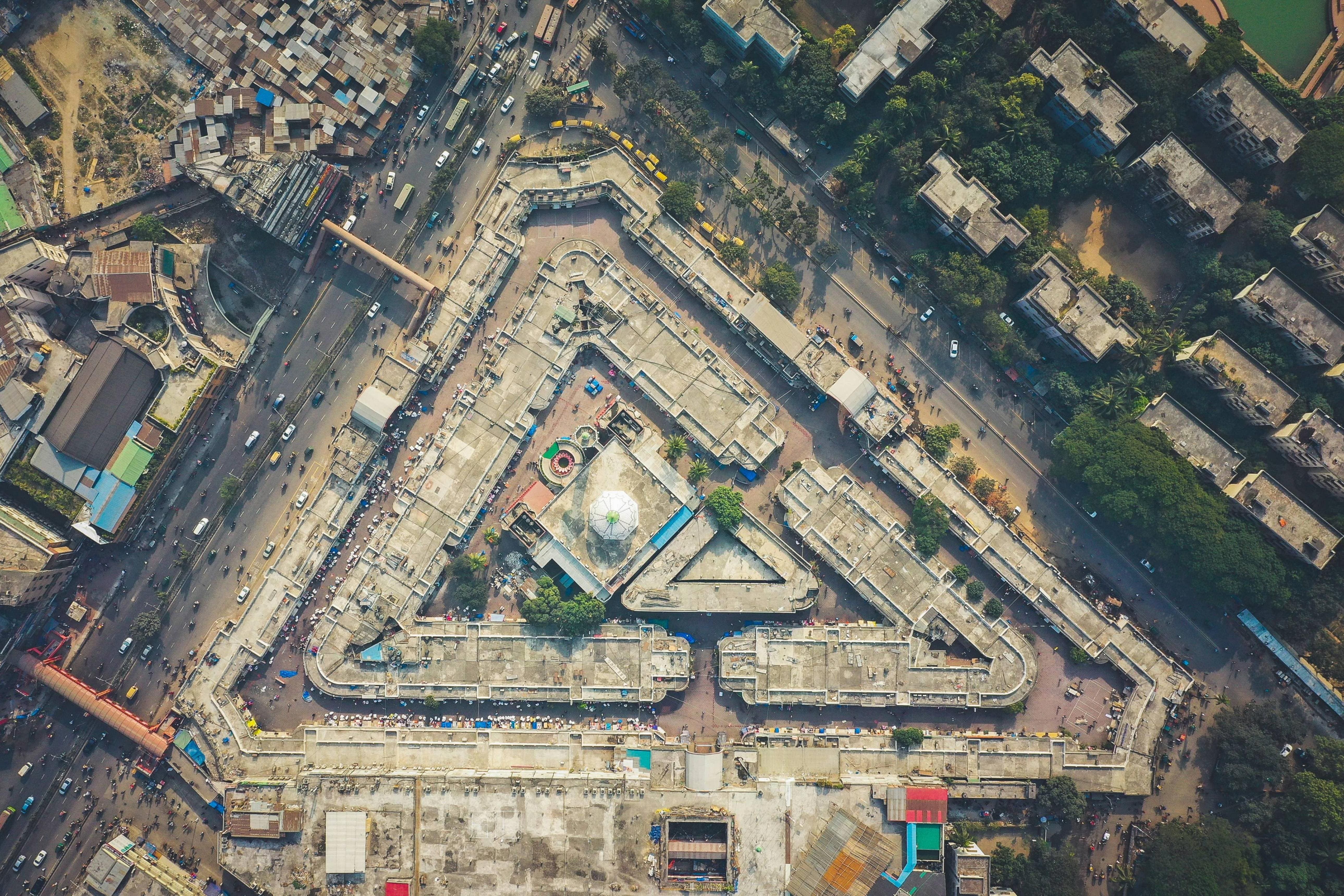
Caption: Aerial view of Dhaka New Market, photographed on 12 January 2019. The image shows the complex many decades after its original construction. Photograph by Fxxabir, Wikimedia Commons, CC BY-SA 4.0. [6]
The aerial photograph above shows New Market in 2019, long after its initial development. It helps readers recognise the complex and its place within the surrounding city, but it should not be mistaken for an image of the market as it appeared in 1954. Later construction and commercial expansion altered parts of the original setting.
Indeed, New Market's popularity encouraged further retail development nearby. The architectural study published in 2004 identifies additional commercial projects and shopping areas that emerged around the complex during subsequent decades. As these developments accumulated, the area became an increasingly important retail district, while the market itself underwent physical changes. [8]
New Market eventually became something that its original name could scarcely anticipate: a historic shopping destination. The complex that had represented a new stage in Dhaka's commercial development came to be valued for its age, architecture and place in the memories of generations of shoppers.
Two Shopping Worlds, One City
The relationship between the bazaar photographs and New Market becomes most revealing when their dates are placed together. The crowded textile market was photographed in 1952, while the fabric vendor, merchant, tailor and shoemaker were recorded in 1953. New Market was under development during those same years, with construction completed in 1954. [1–5, 7]
These records challenge a simple account in which traditional bazaars disappeared as planned shopping centres emerged. The photographs show established forms of market activity continuing during the period when a new commercial complex was being built. They provide evidence of coexistence, not an immediate replacement of one shopping system by another.
There were important differences between the two environments. Traditional bazaars had developed through longstanding commercial practices, with individual businesses and specialised activities concentrated along streets or within familiar market areas. New Market introduced a coordinated architectural plan, bringing shops together around designed pedestrian spaces and prominent entrances.
Yet the distinction should not be exaggerated. Both environments depended on numerous individual businesses operating near one another, offering customers the convenience of finding different goods and services in a shared destination. New Market arranged these activities differently, but it did not invent the principle of bringing traders and shoppers together.
The changing relationship between commercial space and everyday life is also visible in New Market's later development. Its popularity encouraged further shopping facilities nearby, while subsequent additions altered parts of the original design. A complex initially associated with urban modernisation became an established part of the city's commercial heritage.
This suggests a more useful way of understanding Dhaka's shopping history. New markets and shopping centres did not simply erase the traditions that came before them. They emerged within an evolving city, responding to new patterns of residence and movement while existing alongside established forms of trade.
The photographs cannot tell us how every resident chose between shopping destinations, nor can they establish the preferences of all customers in the 1950s. What they demonstrate is that traditional marketplaces remained active at the very moment when Dhaka was developing one of its best-known planned shopping complexes.
The larger story is therefore one of continuity alongside change. New Market represented an important development in the organisation of retail space, but the merchants, craftspeople and commercial relationships associated with Dhaka's bazaars remained part of the city's everyday economy.
Conclusion: What the Photographs Reveal
Return to the crowded textile market photographed in 1952. Its stalls, merchandise and shoppers provide a glimpse of a commercial world in which individual traders and skilled workers were closely connected through everyday market activity. The photographs from 1953 bring that world into sharper focus, showing how selling, making and repairing goods could take place within the same commercial environment.
At almost the same time, Dhaka was building New Market, introducing a planned shopping destination that would become one of the city's enduring landmarks. The old and new existed together, reflecting a city whose commercial life was evolving without losing all its earlier forms.
These photographs preserve more than the appearance of shops and markets. They reveal something of the work, relationships and urban spaces through which ordinary people experienced Dhaka—and how the city's everyday life was beginning to change.
Historical Highlight
In 1952–53, Dhaka's traditional bazaars were still bustling with traders and craftspeople—even as New Market was being built between 1952 and 1954. The old and new shopping worlds existed side by side.
Sources & References
- [1] Clarence Woodrow Sorensen (1952), Crowded Open-Air Textile Market in Dhaka. UWM Libraries.
- [2] Khaleq (1953), Vendor with Fabric at a Dhaka Bazaar. UWM Libraries.
- [3] Khaleq (1953), Vendor with Baskets of Goods at a Dhaka Bazaar. UWM Libraries.
- [4] Khaleq (1953), Tailor Working at a Dhaka Bazaar. UWM Libraries.
- [5] Khaleq (1953), Shoemaker Repairing Footwear at a Dhaka Bazaar. UWM Libraries.
- [6] Fxxabir (2019), Dhaka New Market Aerial Photograph. Wikimedia Commons, CC BY-SA 4.0.
- [7] S. M. Mahfuzur Rahman, New Market, Dhaka. Banglapedia.
- [8] Qazi Muhammad Arif and Ishrat Islam (2004), Shopping Facilities in Dhaka: Transformation of Architecture. The Daily Star.
- [9] Kamrun Naher (2022), Dhaka New Market: A Walk Down Memory Lane of a 70-Year-Old Shopping Mall. The Business Standard.
Preserving our heritage helps us understand our past and build a better future.
Explore More Stories